Freddie’s Leggie Review

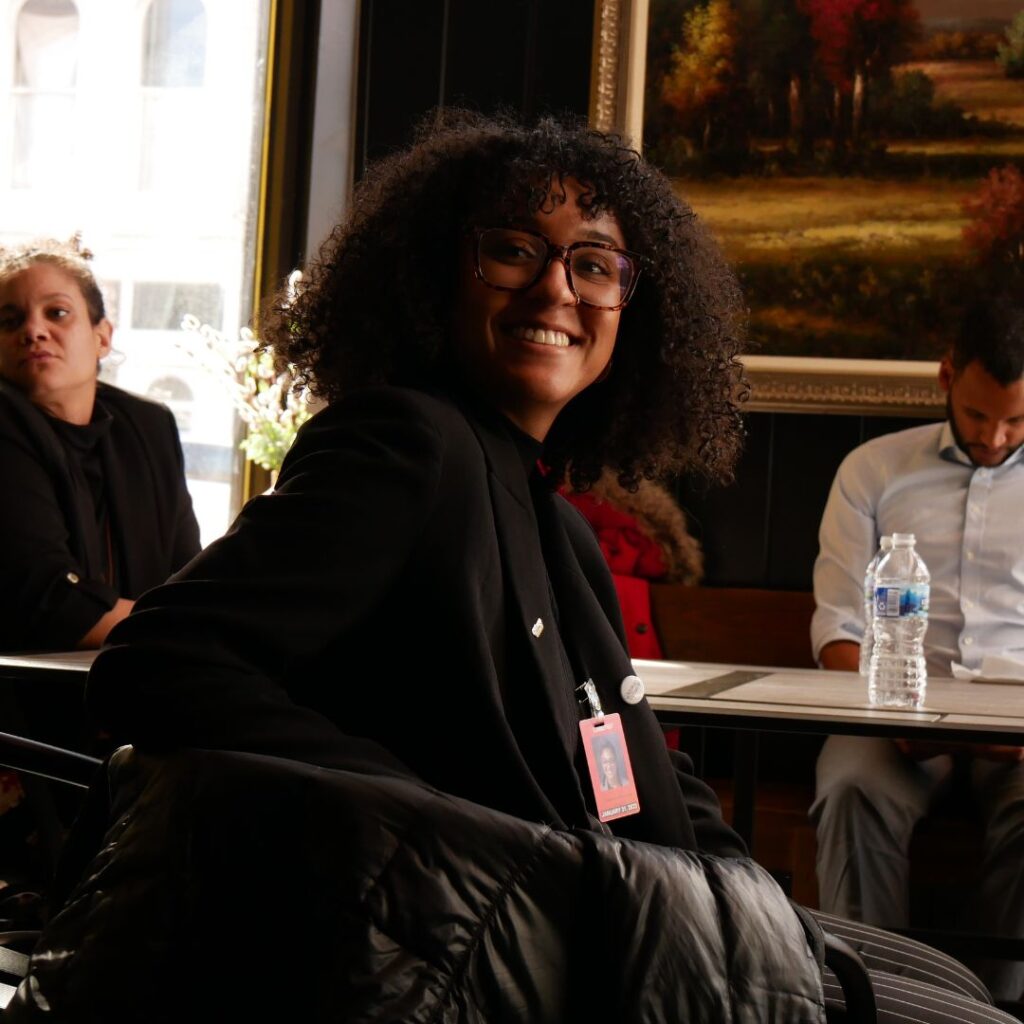
Frederique Desrosiers is Chicago Votes’ Policy Manager, where she focuses on the intersection of voting rights and the carceral system. “Most of my work is trying to build a more equitable society. I’m trying to figure out how to change our world to be more just and compassionate.” 

Hey folks!

Last week, lawmakers returned to Springfield from every corner of the state to commence the 2024 Session. Lets take a look at some of the most buzzworthy topics right now in Illinois:

Governing.com laid out some state policy trends to watch as legislatures all over the country begin to convene.

Transgender rights, abortion, AI, international relations, housing, and crime are some of the trending issue areas across the country.

The Migrant Crisis is becoming more dire, it’s estimated that since the summer of 2022, 15,500 asylum seekers have arrived in Chicago, after Texas Governor Greg Abbott began bussing folks from the Texas border to sanctuary cities.
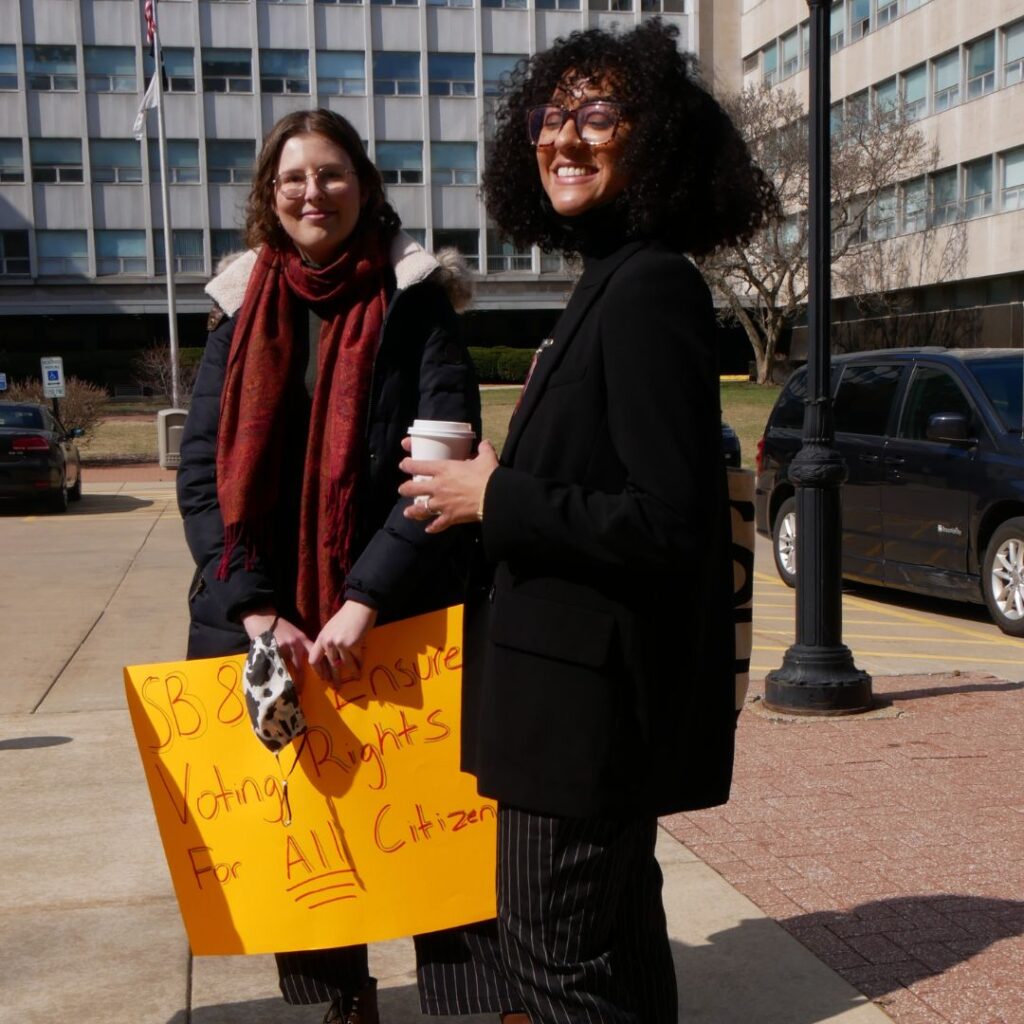
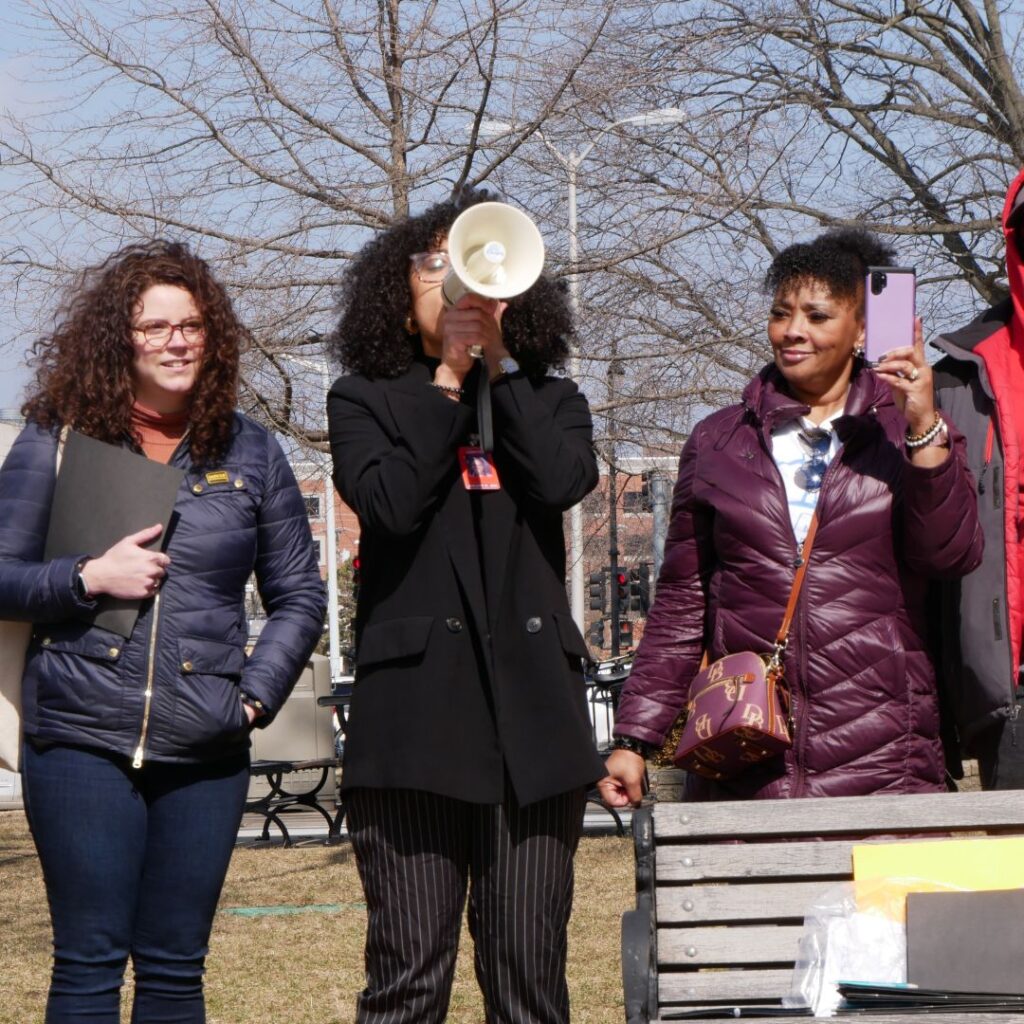
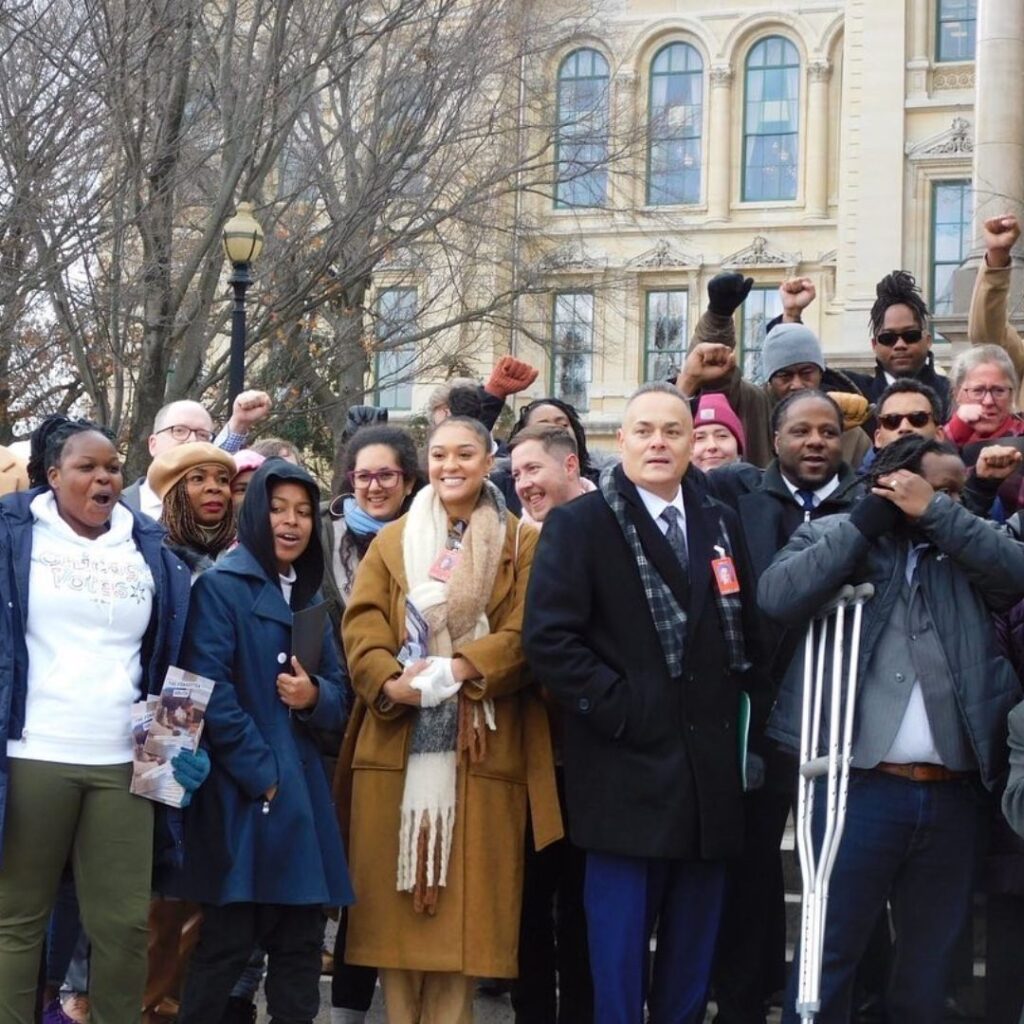
Frederique Desrosiers in Springfield advocating for the expansion of voting rights.

Sanctuary cities became a thing in the 80s, when city governments said that they would not comply with federal immigration agencies, when it comes to undocumented residents. Beyond that, sanctuary cities often don’t use citizenship status as a requirement to get access to public services.

In Texas Governor Abbott’s view, he’s testing Democratically led cities on their values and giving them a taste of what goes on at the Mexico/Texas border. This is the sinister side of partisan politics, using human beings, many of whom have been subject already to violence and instability, to prove a point.

Naturally, Chicago, a city that has already failed to meet the basic needs of its residents, is not equipped to deal with the magnitude of folks that have arrived in our city. Our public schools need more support and resources, access to health care and mental health services are not great, and we already have a huge number of unhoused folks. If anyone passes a Chicago Police Department Station anywhere in the city, you probably see tents, air mattreses up against the wall, women with young children, people grilling–basically a community of people searching for a better life, just to be .

Government officials have been pointing the finger every which way. Chicago’s mayor and city council are looking to the Illinois government, Illinois leadership is saying the federal government needs to stand up and provide support.

Now winter is here, blowing her arctic breeze right on our city. Illinois Governor JB Pritzker sent a letter to Texas Governor asking him to stop sending migrants to Chicago during these frigid temperatures, but he probably won’t.

Pritzker did say that Illinois would divert $160 million for the migrants, but additional funding from the Illinois General Assembly doesn’t look promising.

This is what Senate President Don Harmon had to say: “The honest truth is, for generations we’ve been saying we don’t have enough money to tackle systemic problems that we’ve known about for far too long, such as homelessness, food insecurity, mental health issues. It’s really hard to convince the General Assembly to appropriate money to solve problems or a new cohort of people when we’ve been ignoring existing problems for far too long.” Okay Don, so what are you gonna do to tackle these issues for Illinois residents, is it finally time to deliver critical services to Illinoisans? Or is this a cop-out to excuse not supporting asylum seekers? We’ll see.

So, what exactly will the Illinois Legislature do in this session? I’ll preface by saying that it is an election year and every single state representative and state senator will be on the ballot for re-election on March 19th, which is smack dab in the middle of the legislative session. To answer the original question, though, typically in election years, legislators want to get things done quickly so they can have enough time to campaign in their districts. On top of that, they avoid voting on anything “controversial”… whatever that means. Mind you, every two years, house members are up for re-election, so every other year, they don’t want to pass certain types of legislation. Right now, following the the SAFE-T Act that passed in 2021, ending cash bail and several other criminal justice-related reforms, lawmakers are reluctant to vote on anything that pertains to crime, people in prison, parole, basically anything that would combat mass incarceration. Republicans relentlessly brought up the SAFE-T Act in the 2022 election year in thier attempt to paint democrats as “soft on crime” and allowing reckless criminals on the street putting us all in danger (whole time, the SAFE-T Act wasn’t even implemented until 2023).

Republicans were using fear and misinformation to discredit some of the most groundbreaking criminal justice reform to sway voters, they ultimately failed. Illinois Democrats won overwhelmingly and even gained seats in the Illinois legislature. This illustrates Illinois voters are willing to implement alternative approaches to criminal justice and public safety.

Unfortunately, the Republican fear tactics still did a number on Illinois Democrats, who have punted several other necessary reforms, like bringing parole back to our state, or restoring the right to vote to people in prison. Fear has been an effective tool all over the country and it’s been working. Republicans and right wing news outlets and social media accounts have been sharing videos of retail theft to rile up thier base. The lobbyist group for retailers in went as far as saying that “organized crime” was responsible for almost half of inventory losses in 2021, they were later made to retract that statement because it was untrue and had no reliable research to back it up, an article in the New York Times says the number is closer to 5%…. An article on The Hill wrote that “retail theft is robbing people of the American Dream” not inflation, poverty wages, student debt, but people stealing items from stores. Americans excuse stealing ancestral homeland and wiping out indigenous people, stealing natural resources from countries in Africa, but draw the line at people stealing merchandise from corporations. Okay…

Several states have been increasing penalties for crimes.

In 2022, when the Unlock Civics coalition attempted to pass the Voting in Prison bill, lawmakers ran in the other direction, saying they would revisit after the election, in fear that this vote would be used against them, but that never came to fruition even though almost everyone won their seat back.

To me, this indicates that many lawmakers are more interested in being re-elected than they are with passing legislation that would right the wrongs of the past and set our state on a new path. If democrats care about getting young people to the polls this year, skirting past important issues isn’t particularly convincing for the reluctant voter or skeptical young person.

Heres some legislation to watch:

IL HB4448 | 2023-2024 | 103rd General Assembly | LegiScan:

A bill introduced by Rep Suzanne Ness would make it illegal for restaurants and grocery stores to give or sell single use plastic or paper bags. I understand wanting to save the environment and to lessen the amount of plastic waste and promote reusable shopping bags, which I’m sure retailers will sell but at a higher price point. I can see this being potentially harmful to the elderly and homeless folks. Rep Ness, we are recycling the bags I swear! I got a bag of bags under my sink to prove it! Who knows if it will pass, but the grannies aren’t gonna like this one.

Rep. Gregg Johnson filed HB4417

Amends the Course of Study Article of the School Code. Provides that all public high schools, including charter schools, shall designate and annually observe a week known as “Workplace Readiness Week”. Provides that students shall be provided information on their rights as workers during that week, and sets forth what information must be included. Provides that for students in grades 11 and 12, the information shall be integrated into the regular school program but may also be provided during special events after regular school hours. Effective immediately.

I understand why this seems attractive, and I actually really like Rep Johnson and I wouldn’t be upset if it passes. The US school system is designed to create workers and train them to become participants in the hierarchy that ultimately supports the capitalist agenda. Schools teach students to be docile, conforming, and obedient. My hope is that one day schools will be truly a hub of learning, teaching kids critical thinking and supporting their creativity, in a democratic way. I hope for a system that doesn’t just churn out compliant students, but responsible, free-thinking, and compassionate citizens who can reimagine the systems that no longer serve them.

IL HB0001 | 2023-2024 | 103rd General Assembly | LegiScan

This is great day for my shroom girlies! This bill removes psilocybin from the list of Schedule 1 drugs like heroin and meth and creates an advisory board for the Department of Public Health on the use of psilocybin. It also decriminalizes and allows for expungement for folks who have a record of having psilocybin. If this concerns you in any way check out The Mind Explained on Netflix, they have a great episode on how psychedelics were criminalized and demonized in our current culture.

IL HB4285 | 2023-2024 | 103rd General Assembly | LegiScan

This bill would allow 14 and 15 year olds to work as long as the job doesn’t require any formal education, certification, or license; involve the use of dangerous machinery or chemicals, or require them to stay out past curfew…. This bill was introduced by a Republican representative, which tracks, as Republicans across the country have been pushing to weaken child labor laws. They are saying these bills are an attempt to fill the worker shortage.. I have thoughts but check out the article linked to learn more about why and the potential ramifications of amending our child labor laws.

IL SB2723 | 2023-2024 | 103rd General Assembly | LegiScan

This bill introduced by Democratic Senator Patrick Joyce, would require folks to have a valid photo ID to use a Link Card at the grocery store. It would also require the Department of Human Services to include the name of everyone in the household that is authorized to use the card.

This bill is really annoying to me. This could only lead to problems and potentially be a barrier to folks getting the food they need. Why are folks so hellbent on putting barriers in front of poor people trying to get groceries? Are there not more pressing things to do in Springfield than add more bureaucratic steps that low income folks already have to navigate? Gimme a break…

That’s all folks! Stay tuned for more updates throughout the legislative session. 

This is Freddie, signing out!

The Chicago Votes Monthly: What’s Your New Year’s Resolution?

It may be a new year, but Chicago Votes is steadfast in our commitment to breaking down barriers to democracy for young Chicagoans! 2024 is a jam-packed year with elections, legislative sessions, and more than a few happy hours, workshops, and programs. 

Before we get carried away, let’s lay out all the ways to tune into our work:

  • Tell your friends and family to sign up for our monthly newsletter
  • Follow Chicago Votes on Instagram, Twitter, and TikTok @chicagovotes 
  • Wanna partner with us? Fill out our Partnership Request Form! 
  • Get involved with our programs like Court Watching, Cook County Jail Votes, and Give A Sh*t on our volunteer platform
  • Donate and join our membership program, the Clique. Based off your giving level you’ll receive some exciting perks!

*New Year’s Resolution: Seek out knowledge, challenge injustice, fight for liberation, and let yourself feel joy*


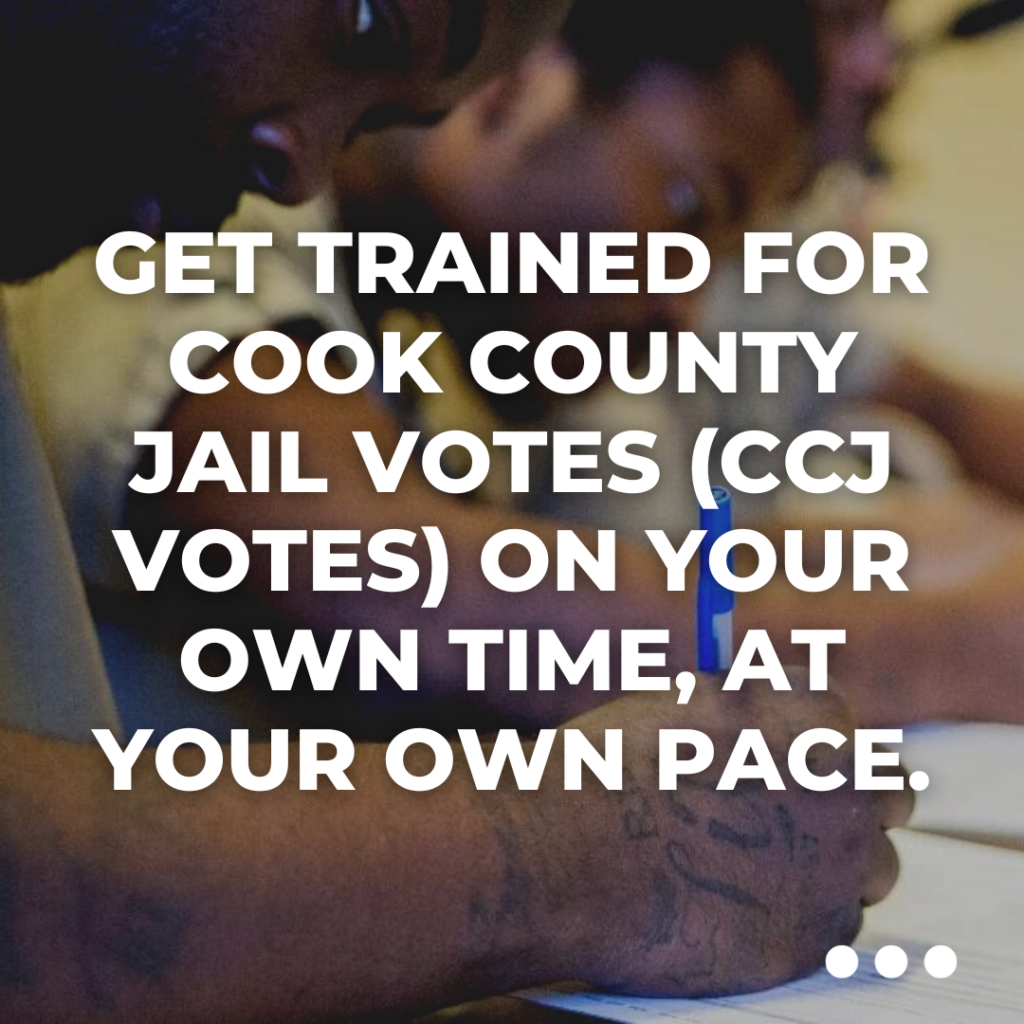
Become a CCJ Votes volunteer, in a few steps. Start by completing the fully online, self-paced Cook County Jail Votes training. Once you complete the training course, you will begin receiving monthly CCJ Votes opportunities in your inbox!

Chicago Votes and the Illinois Alliance for Reentry & Justice have launched a court-watching program, sending community members inside Cook County Criminal Court to watch judges and collect data on bias and misconduct. The data collected will help in the creation of a judicial voter guide in 2024.

Get trained to become a court watcher online, at your own pace. 

Our Give A Sh*t Creative Collective is a hub for creatives to rethink how we engage young Chicagoans in the political process. The Collective is made up of a diverse set of artists, including designers, musicians, poets, and videographers. Joining gives you access to paid opportunities, including mini-grants.

At the start of the 2024 legislative session, we will be reintroducing a bill to re-enfranchise people in prison. More updates to come!

In the meantime, become an expert on felony disenfranchisement and the need to restore voting rights to people in prison here.

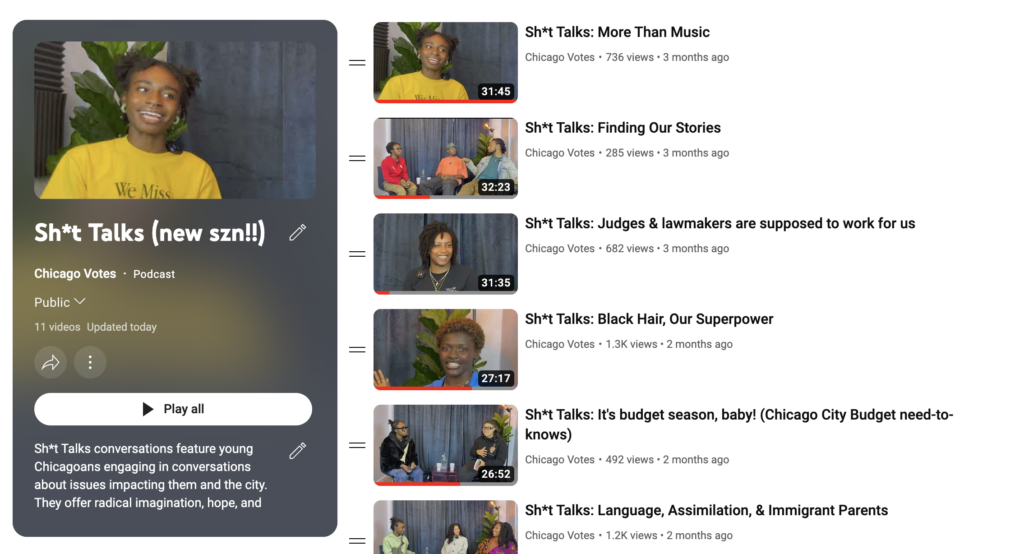
Season 4 of Sh*t Talks wrapped up at the end of the year and is available on Youtube and wherever you stream your podcasts. 

Sh*t Talks conversations feature young Chicagoans in conversation about issues impacting them and the city. They offer radical imagination, hope, and realness.

Season 4 Lineup:

More Than Music: The connection between hip-hop, rap, and community is indisputable, but how does it show up in Chicago? How are artists in Chicago using their platform for advocacy and change? Sit down with host Naira, MfnMelo, and Theresa Ashford to find out.

Finding Our Stories: Naira is joined by Makafui Searcy, the founder of Fourtune House, and David W Johnson, the founder of True Chicago, to talk about finding our familial stories, the challenges in documenting and preserving family history, and reconnecting with family members.

Judges & Lawmakers Are Supposed to Work for Us:  Naira sits down with two of Chicago Votes’ very own: Camille Williams, program manager, and Frederique Desrosiers, policy manager. Together, they break down the judicial and legislative branches in a way that actually makes sense and make sure you know how to be a part of changing/dismantling these systems. 

Black Hair, Our Superpower: Tre King and Elizabeth Tutu are two Columbia College Chicago graduate film students creating a documentary focused on young black individuals’ relationship with their hair and capturing it through film photography. Together, they discuss the cultural significance of hair in the Black community, and the importance of representation in media for shaping aspirations and self-confidence, and more than one hairstyle disaster… 

It’s budget season, baby! (Chicago City Budget need-to-knows): Together, Naira and Natalie, City Bureau’s Documenters Coordinator and City Budget expert, break down the city budget process, encourage residents to participate in public hearings, and highlight the impact of budget decisions on residents.

Language, Assimilation, & Immigrant Parents: Get ready to laugh, reminisce, and celebrate the power of language with Sh*t Talks host Naira Bills, and Chicago Votes staff Katrina Phidd and Kiah Sandler! The three of them–children of bilingual parents from the Black Diaspora– dive deep into their immigrant roots and the power language has to foster connections and shape barriers.

Battling Burnout as a Young Organizer: Organizing work involves a lot of pressure, guilt, and burnout. Let’s talk about it. Alycia Kamil, a multidisciplinary artist and freedom fighter from the south side of Chicago, joins Naira to discuss burnout, particularly for people who started organizing at a young age. 

What is Mutual Aid? Together, Naira and Trina, a Data Director at the Invisible Institute, a journalist, a native Southsider, and a mutual aid practitioner with Not Me We, delve into the importance of mutual aid and community support. They emphasize the interconnectedness of factors impacting safety and stress the value of building networks of care. Tune in to this thought-provoking episode as they explore the power of love and community in times of need.

Liberation from Chicago to Gaza: Naira engages in a timely and thought-provoking conversation with Shawnee Dez, Isra Rahman, and Stuti Sharma on freedom and collective liberation. The episode centers around the war on Gaza and the trio’s collaborative effort in organizing a youth teach-in on the topic.

Community Benefits Agreement and Anti-Displacement Organizing: Naira is joined by Dixon Romeo and Kiara Hardin to explore the ongoing battle against displacement and gentrification in Southshore Chicago. Dixon Romeo and Kiara Hardin are both at the forefront of the fight against the looming specter of gentrification, particularly in the context of the Obama Presidential Library development.

I Care, You Care, Haircare: Naira sits down with Chicago rapper, friend, and the brains behind Love and Nappyness, Matt Muse. They explore the artist’s role in social movements and community engagement. Matt Muse shares his insights on finding one’s unique place within these spaces, emphasizing the importance of contributing to the community while staying true to your individual strengths and talents.

On Class Conflict in the Japanese Animation Industry.

Kenneth Mazerat, a dedicated anime enthusiast and student, delves into the intricacies of class conflict within the Japanese Animation Industry in his piece “On Class Conflict in the Japanese Animation Industry.” By examining the dynamics of class struggle and the exploitation of workers in the anime sector, Mazaret sheds light on the need for organized labor. His exploration emphasizes the significance of addressing class conflict and ensuring equitable access to the means of production in the realm of Japanese animation and beyond.

Get Paid to Create! 

We publish stories submitted by young Chicagoans, a.k.a. you! You can submit op-eds, digital content, poems, and photos. Selected contributors will be paid $100 per published piece. Pitch us a story here.

On Class Conflict in the Japanese Animation Industry

Over the past few years, the world has fallen in love with Japanese animation or “Anime”. Yet, many don’t know the working conditions in which this great art is created. The animators in the anime industry are being hyper-exploited for the production of anime. This isn’t a unique situation, but rather a problem of class conflict and class contradictions. As such, these problems have solutions that particularly impact the sources of the problem.

An overview of the general problem is as such, the anime industry is overworking and underpaying its animation employees to make massive profits. This is not a unique problem, for this is a mere expression of class contradictions and the capitalist material interest under capitalism.  

However, before the class analysis, the exact labor conditions within the anime industry must be established. “ The low wages and abysmal working conditions — hospitalization from overwork can be a badge of honor in Japan — have confounded the usual laws of the business world.” according to the New York Times

“Harsh working conditions prompted many people who dream of working as an animator to give up. The reason is because the pay is not enough to cover daily expenses. Sugawara explained that a work system like this often causes many young animators to stop pursuing their dream of making a career as an animator. In fact, about 90% of Japanese animators decide to give up their job after three years.” according to TFR news.

Put simply, class is not defined by income, it is defined by one’s relation to the means of production. The means of production are the things that create things. An example of this would be a factory oriented towards the production of bread. Within this context, the means of production is the place in which animation is produced. 

Wherever people work, is a place that holds the means of production. It doesn’t have to be a factory, and it could even be something like a Fortune 500 company. The point here is, that within capitalism, the capitalist privately owns the means of production.

 This means that the workers who work within the means of production don’t have a say in how production is run, and are instead bossed around and given tasks in exchange for a wage. This creates an inherently antagonistic class dynamic between the working class and the capitalist class. The lack of self determination in work environments is a key problem for both the Japanese animation industry and for workers all around the world

The important part here is that because there is this class power dynamic, there are inherently antagonistic opposing material interests. The capitalist, to make the highest amount of profit possible, must overwork, and underpay their workers as much as possible. 

However, as a worker, one wants to be paid as much as possible, and to work as little as one needs to. Think about any time you have been asked to stay to work longer than agreed upon. This feeling is the manifestation of class struggle .The anime industry can be seen through this class dynamic. The owners of the means of production are overworking and underpaying their employees, specifically because the consequence of this results in greater profits for the animation studio. 

Yet, because this is a class issue, this issue has a clear solution. If the problem is that workers are being over-exploited, then the workers must organize together in solidarity. This is to say that the working class of Japan must unionize for greater working conditions. 

Unionizing is a great solution for this problem because it allows for collective bargaining and the organization to do things like strikes. The workers within the animation industry could refuse to draw another cell of animation, and therefore halt the means in which profit is created.

This means that if the workers within the anime industry want greater pay, they must do what workers in the past and present have always done. The workers of Japan must unite for a greater tomorrow.

Finally, the solution to the Japanese labor problem isn’t unique. Workers all across Chicago have been unionizing and striking for a higher quality of life. Furthermore, the working class has many tools in its toolbox for the fight for higher working conditions. It is then up to the workers within each of their unique material conditions to choose which tools work best for them.

Sources

  • New York Times: Anime Is Booming. So Why Are Animators Living in Poverty? By Ben Dooley and Hikari Hida
  • TFR News: The sad life of Japanese animators behind the booming anime industry by Rahma Yulita
>